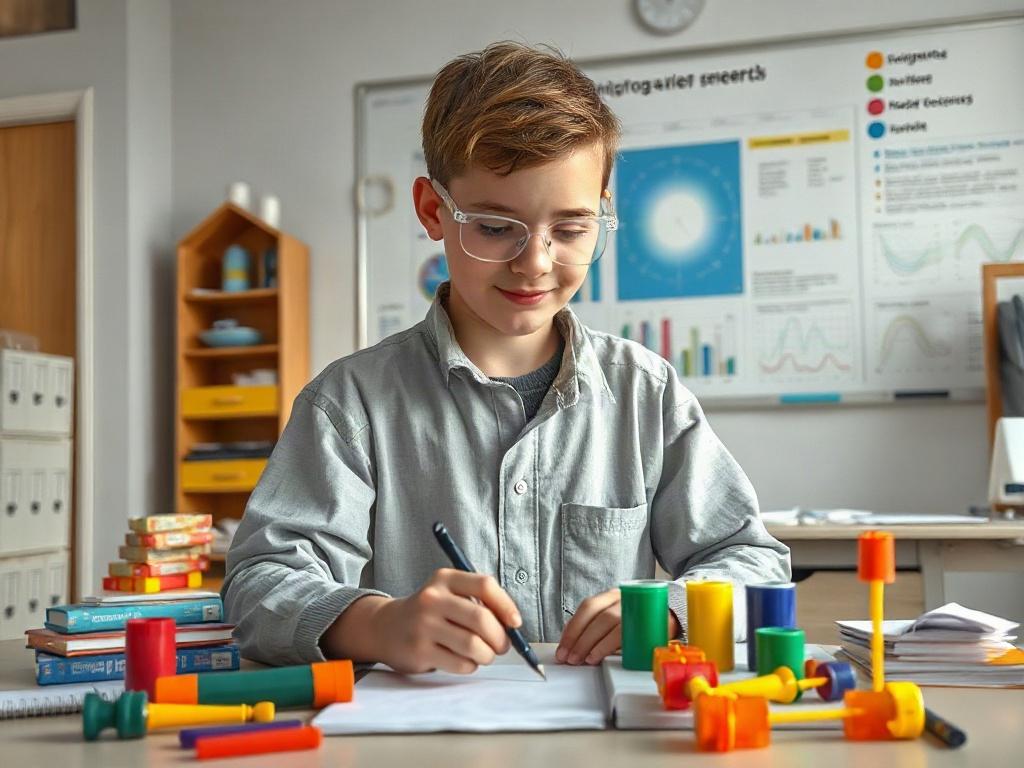
In today's rapidly advancing world, opportunities for students to engage in authentic science and research are more important than ever. The International Journey to Space Education Program (IJSEP) Mission 2026-2027 empowers 8th and 9th grade students to dive deep into the captivating realm of space research through hands-on experiments and collaborative projects. By participating in this unique program, students learn to think like scientists, work as team members, and communicate their findings effectively, all while developing vital skills in science, technology, engineering, and mathematics (STEM).
IJSEP is not merely an educational initiative; it serves as a transformative platform that bridges the gap between classroom learning and real-world applications in the New Space Economy. Throughout the mission, students take part in a structured pathway—from formulating research questions to competing for the chance to send their experiments into microgravity. Educators play a crucial role in guiding students through this creative journey, nurturing their curiosity and scientific literacy, and ultimately demonstrating how meaningful discoveries can originate from their own classrooms.
Understanding IJSEP: An overview of Mission 2026-2027
IJSEP Mission 2026-2027 serves as a unique international educational experience that immerses students in the world of space research. This program grants 8th and 9th-grade students the opportunity to engage in critical scientific principles through hands-on experimentation. Students develop their own research questions, formulate hypotheses, and design microgravity experiments, guiding them through a structured pathway that mirrors real scientific missions. The mission combines science, technology, engineering, and mathematics (STEM) with collaboration and innovation, positioning students to think like scientists and communicate effectively as researchers.
The mission's primary objective is to connect students and educators to an authentic research experience in microgravity science. Participants gain insights into the critical processes of scientific inquiry while sharpening their English-language scientific writing and presentation skills. Throughout the program, teams receive expert mentoring, engage in proposal reviews, and can even compete for the chance to send one selected experiment to microgravity. By emphasizing real-world applications of science under authentic constraints, IJSEP encourages students to transform their curiosity into impactful research that resonates beyond classroom walls.
How the Program Works
Each country will be considered one International Community within the IJSEP Mission. Each International Community organizes a local Flight Experiment Design Competition. Student teams from 8th and 9th grades submit formal experiment proposals, and the proposals move through a staged review and recognition process.
Stage 1: Broad Outreach and Registration
Schools may invite student teams to register interest and begin learning about the IJSEP opportunity.
Stage 2: Official Coordinated Pathway
Selected teams enter the structured program pathway and receive official guidance, timeline communications, and educator support.
Stage 3: Proposal Development
Teams design microgravity experiments and write formal research proposals using mission resources and mentoring.
Stage 4: Brazilian and International Review Board
A local review process identifies the strongest proposals to move forward for U.S. scientific review.
Stage 5: U.S. Scientific Review Board
The U.S. Scientific Review Board reviews the advanced proposals and supports the selection pathway.
Stage 6: Semifinalists, Finalists, and Flight Experiment
Ten semifinalists, three finalists, and one selected flight experiment create a clear and professionally selective mission ladder.
Selection Pathway
Up to 100 teams may enter the official coordinated pathway. Up to 20 proposals may advance through formal review. Ten semifinalists, three finalists, and one selected flight experiment create a clear, exciting, and professionally selective mission pathway.
Why Microgravity Research Matters
Microgravity gives students a new lens for scientific thinking. When gravity is reduced or removed as a dominant variable, biological, physical, and chemical systems may behave differently. This allows students to ask a powerful research question: What happens to my experiment when gravity is reduced for a period of time?
By exploring that question, students begin to understand why microgravity research matters for space exploration, biology, materials science, agriculture, medicine, engineering, and future human activity beyond Earth.
Central Question for Students
What happens to my experiment when gravity is reduced for a period of time?
Research Themes and Experiment Possibilities
Student teams may explore experiment ideas in diverse fields, provided each proposal meets the technical, safety, operational, and mini-laboratory constraints of the mission.
· Seed germination and plant biology, including questions connected to agriculture and food systems.
· Biotechnology and cell biology, including growth behavior in microgravity-compatible systems.
· Microorganisms, including approved biological models when compliant with safety requirements.
· Crystal growth, fluid behavior, and other physical science questions that can fit within the mini-lab.
· Brazilian agro-industry themes, including seeds, crop resilience, and safe research questions connected to Earth-based challenges.
The goal is not only to design an interesting experiment. The goal is to help students learn how to create a testable question, define variables and controls, understand constraints, write clearly, and explain why their research matters.
The Mini-Laboratory and Mission Constraints
The selected experiment must be designed for a certified mini-laboratory that is suitable for flight. This is one of the most important learning opportunities in IJSEP because students must think like mission designers, not only classroom experimenters.
· Experiments must fit within the mini-lab size, weight, volume, and operational constraints.
· Teams must consider safety rules, materials, handling requirements, and documentation requirements.
· Students must explain procedures before flight, during operation, after return, and during post-flight analysis.
· Only one experiment from the community will be selected for microgravity research, preserving the professional selectivity of the mission.
Resources and Mentoring
Teachers and students will have access to mission resources designed to support microgravity science, experiment design, proposal writing, and teacher implementation. Mentoring activities may include scientist sessions, astronaut engagement, teacher check-ins, and approved communication support during the program.
Where to Begin
Educators should begin with the official IJSEP resources page: https://www.internationaljourney.org/resources
The resources are designed to help educators and student teams understand:
· The Flight Experiment Design Competition.
· How to design a flight experiment.
· The mission flight opportunity.
· The critical mission timeline.
· The document library with curriculum and support materials.
· Frequently asked questions.
· Teacher guidance on how to move forward with the program.
Proposed Mission Timeline
Because this is an active space-science education program working with flight and space-industry partners, the timeline below is tentative and may be adjusted based on mission readiness, partner procedures, safety reviews, documentation requirements, and launch-provider schedules.
Note: This schedule is suggested and may be adjusted based on mission readiness, safety review, documentation requirements, partner procedures, and flight-provider availability.
1. Week of October 1, 2026: Program and team announcement.
2. October 1-20, 2026: School/team registration.
3. Week of October 22, 2026: IJSEP opening session, scientist introduction, and astronaut welcome.
4. October 22-December 21, 2026: Experiment design, proposal writing, and scientist mentoring.
5. Week of October 26, 2026 - TBC: Mentorship 1 with scientists.
6. Week of November 16, 2026 - TBC: Mentorship 2 with scientists.
7. January-February 2027: Proposal refinement, teacher check-ins, and optional office hours.
8. During the program: Dedicated WhatsApp and email support for IS coordinators, teachers, and approved team leaders.
9. February 18, 2027: Step 1 - Brazil: final proposals due to the Brazilian Review Board.
10. Week of February 22, 2027: Space Talk with IJSEP Astronaut.
11. March 1, 2027: Step 2 - up to 40 proposals forwarded to the U.S. Scientific Review Board.
12. Week of March 8, 2027: Formal selection of the Top 10 semifinalists.
13. April 2027 - TBC: Top 10 semifinalist teams invited to present their experiments at Science Days Brazil.
14. During or shortly after Science Days Brazil 2027: Selection of the 3 finalist teams from the Top 10 semifinalists.
15. During or shortly after Science Days Brazil 2027: Formal selection of the selected flight experiment.
16. June/July 2027: International Journey Conference held at KSCIA - Center for Space Education in the Kennedy Space Center area.
17. After the main program activities: Post-program digital recognition, including student/team certificates and educator acknowledgment.
18. Fall 2027: Experiment review, documentation, and payload preparation.
19. Subject to flight-provider schedule: Ferry flight of payload to microgravity.
20. Typically launch plus 4 to 6 weeks: Ferry flight return of the experiment payload to Earth.
What Schools Need to Do
· Identify a school coordinator and participating educators.
· Invite eligible 8th and 9th grade students to form teams.
· Review the official mission resources and understand the experiment design requirements.
· Guide teams through research questions, feasibility checks, proposal writing, and revision.
· Submit proposals according to the official IJSEP timeline and school coordination process.
· Prepare semifinalist or finalist teams for public presentations, when selected.
The transformative power of IJSEP for students and educators
IJSEP Mission 2026-2027 provides students and educators with an unparalleled opportunity to immerse themselves in the world of space research. This program isn't just about learning theoretical concepts; it's about transforming curiosity into actionable research. Students engage in a structured journey where they can ask meaningful research questions, design their own microgravity experiments, and draft formal proposals. This hands-on approach fosters critical thinking, collaboration, and innovation while allowing participants to experience authentic scientific processes. The mentorship offered throughout the mission equips students with insights from professionals, helping them to refine their ideas and improve their proposals.
For educators, IJSEP serves as a powerful platform to inspire and elevate their teaching practices. It bridges the gap between classroom learning and real-world scientific inquiry, effectively turning educators into facilitators of discovery. By guiding students through the complexities of the experiment design and proposal process, teachers become integral to shaping the next generation of scientists and engineers. Additionally, the interdisciplinary nature of the program encourages collaboration among different subject areas, allowing students to apply their skills in writing, technology, and design. Ultimately, IJSEP empowers both students and educators to contribute to the evolving landscape of space science and research.
How to get involved with IJSEP Mission 2026-2027: A pathway to real space research
Participating in the IJSEP Mission 2026-2027 offers a unique opportunity for students and educators to engage with real scientific research in the context of microgravity. To get involved, educators should begin by identifying a school coordinator and encouraging eligible 8th and 9th-grade students to form teams. These teams will embark on a structured journey that includes exploring scientific concepts, designing experiments, and writing formal proposals. By utilizing the official mission resources available online, educators can guide their students through the experiment design requirements, helping them refine their research questions and ensure their proposals meet necessary constraints.
As teams progress, they will experience mentorship from scientists and experts in the field, which is invaluable for their learning journey. The timeline for submissions and various stages of proposal development is clearly laid out in the mission guidelines. Students will have the chance to present their work publicly, participate in competitions, and potentially see their experiment launched into microgravity. This hands-on approach not only fosters engagement but also prepares students for future scientific endeavors. By participating in IJSEP, educators can inspire the next generation of scientists, adapting learning to a compelling real-world context that extends beyond the classroom.
Important Program Notes
· IJSEP is not a NASA program and is not affiliated, associated with, or officially connected to any U.S. government agency.
· All schedules are tentative and subject to mission readiness, safety review, partner procedures, and flight-provider availability.
· All proposed experiments must meet mini-laboratory constraints, safety requirements, documentation requirements, and partner requirements before approval for flight.
· The selected flight experiment is subject to final technical review, feasibility review, documentation compliance, and mission-readiness procedures.
· The program is coordinated from the United States and emphasizes English-based scientific communication.